How a 24 Hour Locksmith Opens a Door Without Damage
Understanding non-destructive entry
When you are locked out of your home or business, the first concern is often the door itself. Many people assume that gaining entry means drilling through the lock or forcing the frame, leaving a costly repair behind. In reality, a skilled locksmith can open most doors without causing any damage at all. This process is called non-destructive entry, and it relies on knowledge of how locking mechanisms work rather than brute force.
Non-destructive entry matters for several reasons. It preserves the security of your property because the original lock remains functional. It saves you the expense of replacing hardware. And it is far quicker than destructive methods, which is especially important when you need urgent local locksmith support in the middle of the night. Understanding the techniques behind this approach helps you know what to expect when you call for help.
How locks work and why manipulation is possible
Most door locks, whether a simple night latch or a multipoint locking system, contain a set of internal components that align when the correct key is inserted. The key lifts pins or levers inside the lock cylinder, allowing the cylinder to rotate and retract the bolt or latch. If you do not have the key, a locksmith can still rotate that cylinder by manipulating its internal parts one by one. This is lock picking, and it is the most common non-destructive method.
Lock picking works because manufacturing tolerances mean that no two pin stacks align perfectly. A locksmith uses a tension tool to apply a slight turning force to the cylinder, then lifts each pin with a pick until it reaches the shear line. When all pins are set, the cylinder turns freely. This process requires fine touch and practice, but it leaves the lock completely unharmed. Many euro cylinder locks, which are common on uPVC doors, can be picked in under a minute by an experienced professional.
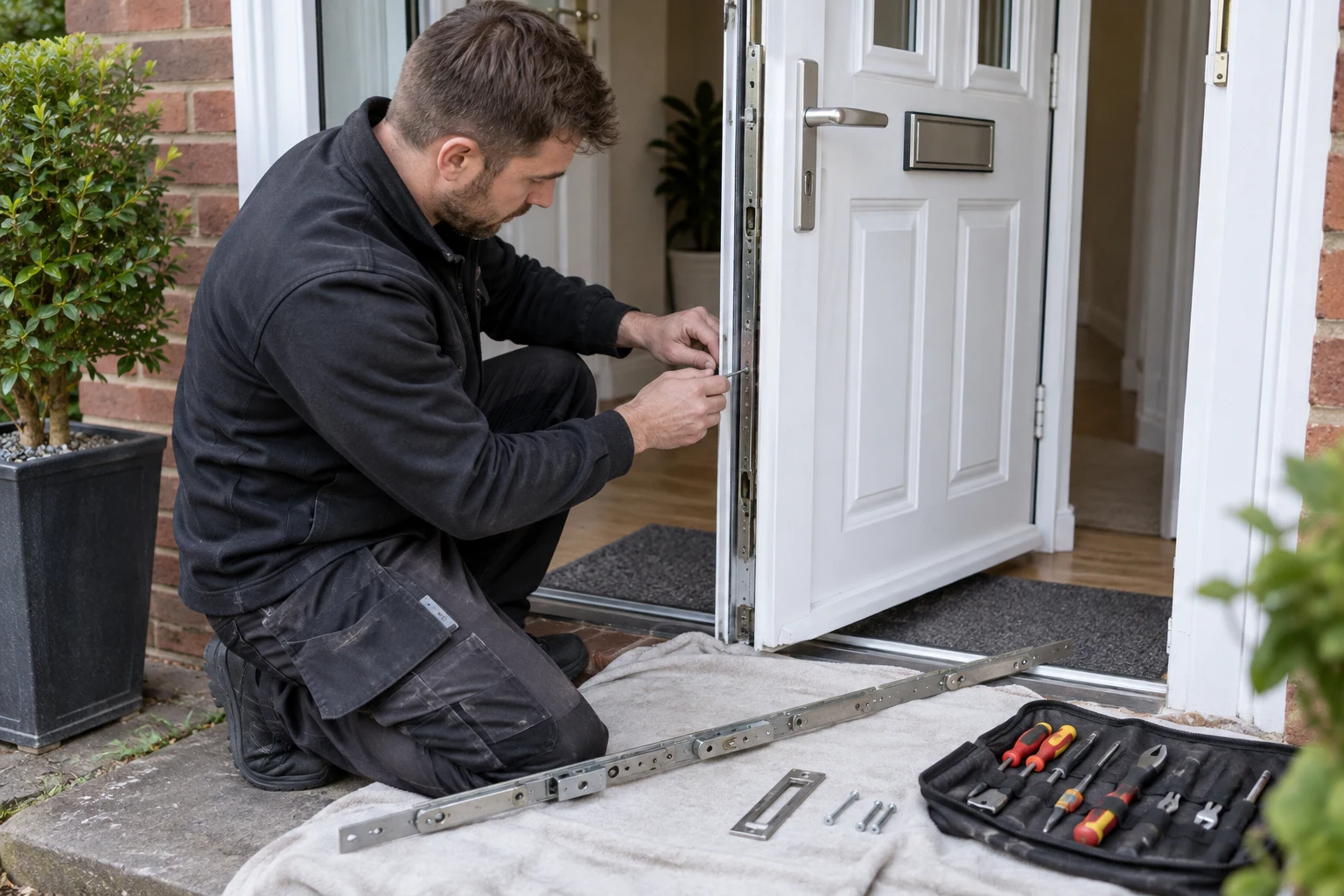
For locks that are harder to pick, such as those with drill protection or anti-pick pins, a locksmith may use other manipulation tools. Bumping, for instance, involves a specially cut key and a light tap to shift the pins. Decoding is another technique where the locksmith reads the lock's internal combination through feel and adjusts a tool accordingly. All of these methods leave the lock intact and reusable.
When picking is not possible
Some locks are designed to resist picking. High-security cylinders with mushroom pins, magnetic elements, or drill protection can make manipulation impractical. In those cases, a locksmith may need to remove the cylinder without damaging the door itself. This is often done by breaking the centre of the euro cylinder with a specialised tool, then turning the remains with a screwdriver. The cylinder is sacrificed, but the door and frame are untouched. Replacing a euro cylinder costs much less than repairing a damaged door, and it restores full security quickly.
Another scenario is when the door latch is jammed or the locking mechanism has failed internally. Here the locksmith might insert a thin strip of plastic or metal between the door and frame to push the latch back. This technique, called loiding or shimming, works on spring latches that are not deadlocked. It is the same method used to open a car door with a wedge and a rod. It causes no damage and takes seconds.
If the door has a mortice lock with a deadbolt, shimming will not work because the bolt is not spring-loaded. The locksmith then has to either pick the lock or, if the key is lost and picking fails, drill a small hole in the casing to retract the bolt manually. Even then, the hole is usually hidden inside the mortice pocket and does not affect the door's appearance or function.
What this means for you as a customer
Knowing that a professional can open your door without damage gives you peace of mind. When you call for urgent local locksmith support, you can ask upfront whether they use non-destructive methods. Most reputable locksmiths will try manipulation first because it is faster and cleaner. They will only resort to drilling or cutting if the lock is seized, damaged, or of a type that cannot be picked.
It also means you should not panic if you see a locksmith arrive with a drill. Sometimes a quick cylinder replacement is the most efficient solution, especially if the original lock is old or faulty. The door itself remains sound, and you get a new lock with fresh keys. The total time for a cylinder swap is often under ten minutes.

Identity checks and proof of address
Because non-destructive entry leaves no evidence of forced access, locksmiths take extra care to verify that you are authorised to enter the property. Expect to show proof of address or a form of identification before work begins. This is standard practice and protects you from someone using a locksmith to break into your home. A trustworthy professional will always ask for ID, even in an emergency.
For rental properties, you may need to provide a tenancy agreement or a letter from your landlord. If you are locked out of a business premises, a business card or utility bill for that address usually suffices. These checks are quick and help ensure the service is used legitimately.
Preventing future lockouts
While non-destructive entry is excellent when you need it, avoiding a lockout altogether is even better. Here are a few simple habits that reduce the risk:
- Keep a spare key with a trusted neighbour or family member who lives nearby.
- Fit a key safe near your door that only you and your household know the code to.
- Check that your door latch is not sticking or wearing out, as a faulty latch can jam and prevent the key from turning.
- Consider upgrading to a lock with a snib or thumb-turn on the inside so you never need a key to exit.
These steps cost little and can save you the inconvenience of being locked out late at night.
Choosing a reliable locksmith
When you need a 24 hour locksmith, look for one who is local and can reach you quickly. A local professional will know the common lock types used in your area and carry the right tools for non-destructive entry. They will also be familiar with the local council's licensing requirements, which often demand that locksmiths have a licence to practise in certain regions.
Ask about their approach before they arrive. A locksmith who explains that they will try manipulation first, and only drill as a last resort, is one who prioritises preserving your door. Also check that they carry insurance, as this covers any accidental damage that might occur during the job, however rare.

Final practical points
Non-destructive entry is the standard for professional locksmiths. It relies on skill and specialised tools rather than force. The next time you are locked out, remember that a good locksmith can almost always get you in without leaving a mark. The cost is often the same as a destructive entry, but you avoid the hassle of repairing or replacing your door afterwards.
Keep the number of a trusted local locksmith saved in your phone. That way, if you ever need help, you know exactly who to call. And when you do call, you can be confident that your door will be treated with care.